
Mbororo women commit to engage key community voices to secure women’s land use rights
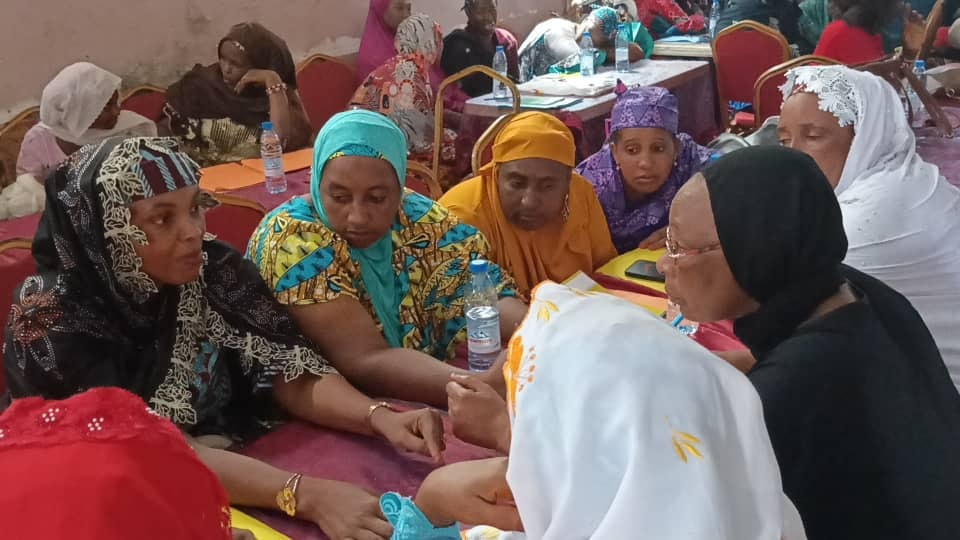
Following the establishment of Mbororo Women’s Forums and the convening of public-speaking and advocacy training, Mbororo women are now better prepared to engage influential community voices in advancing women’s land-use and governance rights in Cameroon.
From Training to Community Action
The Mbororo Women’s Forums were established to strengthen the participation of women in discussions and decisions concerning land ownership, land use, inheritance and local governance.
Through public-speaking, leadership and advocacy training, the selected women have been equipped to lead community-level dialogues and champion efforts that promote women’s access to and control over land.
During the training sessions, participants discussed practical strategies for involving policymakers, traditional leaders, religious authorities and other community stakeholders in the advancement of women’s land rights.
Key Community Voices Identified
The Ardo
As a sub-chief and respected community authority, the Ardo can influence men, families and wider community decisions concerning women’s land rights.
Quarter Heads
Quarter heads have authority, community reach and the ability to mobilise residents around local social and governance issues.
Islamic Judges
Islamic judges play an important role in inheritance matters and can help support fair treatment of widows and daughters.
Men and Family Leaders
Engaging men is essential because they are often regarded as custodians of family property, including land.
The women agreed that targeting influential leaders such as the Ardo, quarter heads and Islamic judges would be essential to achieving positive and lasting change.
Engaging Traditional Leadership
Mbororo women are still lagging behind on issues of land rights. With the empowerment sessions from CAEPA, we shall target the Ardo because he can pass the message to the men in the community, which is where much of the challenge originates.
If our men understand the importance of women owning land, they will not prevent us from doing so. The Ardo is the community leader, and when he speaks, people respect his guidance.
Rugayatou emphasised that traditional leaders can help influence attitudes among men and encourage families to recognise the social and economic importance of women’s land ownership.
Advocating for Fair Inheritance
My group members and I shall target the quarter head. He has authority, a wide reach and people follow his leadership in the community. He can speak to the men, and this alone has the potential to liberate many women.
We shall also target the Islamic judge because he is responsible for the sharing of inheritance. If he understands our appeal, widows and daughters can be given their rightful inheritance from their husbands and fathers.
Engaging religious and traditional authorities is particularly important in inheritance matters. These leaders often guide family decisions and can influence whether widows and daughters are allowed to inherit or continue using family land.
Building Confidence for Advocacy
We have been educated on public speaking, leadership and advocacy. We have also been taught how to communicate information effectively.
In the past, we faced challenges meeting and addressing our community leaders. Today, we are ready. I am ready to meet them because I have been trained in advocacy approaches that respect Islamic law.
The training helped participants strengthen their confidence, organise their messages and prepare respectful approaches for engaging community and religious leaders.
Participants were also introduced to advocacy strategies that recognise local customs and Islamic principles while promoting dignity, fairness and women’s rights.
Women Leading Local Advocacy
The trained participants are no longer approaching community advocacy as isolated individuals. They are working through organised women’s groups and forums that provide collective strength, shared knowledge and a stronger platform for engaging decision-makers.
Why Men Must Be Part of the Conversation
I am a group leader, and I see the need to target the men in our community. Men are regarded as the custodians of property, including land.
When they understand the importance of women owning land, every wife becomes more secure, every daughter has a better chance of inheriting land from her father, and sons will no longer fight with their sisters over land.
The women recognised that sustainable progress cannot be achieved without involving men. Men often influence household property decisions, customary inheritance practices and the allocation of land within families.
By engaging men as partners rather than treating them only as opponents, the women hope to encourage dialogue, reduce family conflict and promote greater recognition of the rights of wives, widows and daughters.
Planned Advocacy Strategies
- Organising community dialogues on women’s access to and control over land.
- Meeting traditional authorities, including the Ardo and quarter heads.
- Engaging Islamic judges on inheritance rights affecting widows and daughters.
- Sensitising men about the social and economic benefits of women’s land ownership.
- Using respectful advocacy approaches aligned with local culture and Islamic principles.
- Strengthening women’s groups as permanent platforms for collective advocacy.
Creating Platforms for Social and Economic Empowerment
As the women prepare to engage influential persons who can support the advancement of women’s access to and control over land, they have also established platforms that will promote social and economic activities.
These forums are intended to provide women with spaces for dialogue, mutual support, knowledge sharing, leadership development and economic cooperation.
Strengthening women’s financial independence is an important part of securing their land rights. Women who have access to livelihoods, savings and collective support are better positioned to participate in decision-making and advocate for their rights.
Building Sustainable Community-Led Change
CAEPA Cameroon is investing in a community-based approach that places local women and stakeholders at the centre of the change process.
Rather than relying only on short-term project activities, the initiative equips community members with the knowledge, confidence and platforms needed to continue advocacy after the formal project period has ended.
By strengthening women’s leadership and engaging traditional, religious and family authorities, the Mbororo Women’s Forums are laying the foundation for lasting progress in women’s land-use, ownership and inheritance rights.