
Caepa Enhances MHM Practices In Mezem, North West Region Of Cameroon
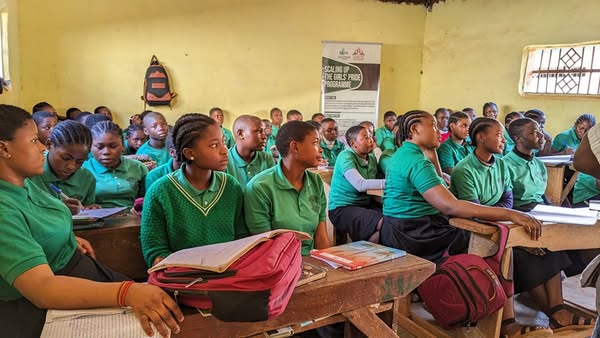
Thousands of adolescent girls in Cameroon’s North West Region still lack reliable access to sanitary products. This challenge affects their health, dignity, confidence and participation in education.
Menstrual Hygiene Challenges Affecting Adolescent Girls
In both rural and urban communities across the North West Region, many girls continue to use pieces of cloth, tissue and other unsuitable materials to manage menstruation because they cannot afford sanitary pads.
This recurring challenge has serious consequences for the sanitation, health and educational wellbeing of adolescent girls. Inadequate menstrual hygiene materials can increase discomfort, anxiety and fear of staining clothes while at school or in public.
School absenteeism among girls is frequently linked to the inability to purchase menstrual hygiene products. Many girls report missing lessons, school activities and examinations because they cannot afford a packet of sanitary pads each month.
CAEPA’s Menstrual Hygiene Intervention
Providing Dignity Kits in Mezam Division
To address these concerns, the Community Agriculture and Environmental Protection Association is strengthening menstrual hygiene management practices across the region.
CAEPA Cameroon distributed dignity kits to 150 adolescent girls in Mezam Division. The intervention was designed to help girls manage menstruation safely, hygienically and with greater confidence, particularly within the context of the ongoing socio-political crisis in the region.
Contents of the Dignity Kits
Sanitary Pads
Buckets
Underwear
Wrappers
Detergents
These materials provide practical support for washing, changing, cleaning and managing menstruation more safely. They also help reduce the anxiety and embarrassment that girls may experience when they do not have appropriate menstrual hygiene products.
Reaching Indigenous Mbororo Girls
Among the beneficiaries were young Mbororo girls from indigenous communities. Girls in these communities often face additional barriers to accessing menstrual hygiene information and products.
By providing essential materials, CAEPA Cameroon is supporting better personal hygiene while addressing the shame, silence and stigma frequently associated with menstruation.
In some indigenous communities, girls reported that they had seen or touched a sanitary pad for the first time during the distribution exercise. This demonstrates the significant gap that still exists in access to basic menstrual hygiene products.
Menstruation Is a Natural Part of Growing Up
Alongside the distribution of dignity kits, CAEPA conducted educational sessions to increase knowledge, confidence and self-esteem among the girls.
The sessions reassured participants that menstruation is a normal biological process and should not be treated as a source of shame, embarrassment or social exclusion.
Building Knowledge, Confidence and Preparedness
Through interactive discussions, the girls learned how to understand and track their menstrual cycles, use sanitary pads correctly, maintain personal hygiene and prepare for menstruation while attending school.
CAEPA’s goal is to improve the girls’ self-esteem, dignity and confidence as they progress through adolescence and learn more about their bodies.
Menstrual Cycle Awareness
Girls learned how to track their cycles and prepare for their next period.
Improved Hygiene
Participants received guidance on safely using and changing menstrual products.
Greater Confidence
The sessions challenged myths and reduced shame associated with menstruation.
Improved School Attendance
Access to sanitary products helps girls remain in class during menstruation.
Beneficiaries Share Their Experiences
The beneficiaries explained that the educational discussions had significantly improved their understanding of menstruation and helped them feel more prepared.
I have learned many things that I did not know before. The first thing I learned was how to calculate my menstrual cycle.
Today, CAEPA has given us dignity kits containing sanitary pads. These pads are very important to me and my sisters because sometimes I go to school without knowing that my period will begin.
I will keep a pad in my school bag so that I am prepared at all times. Thank you, CAEPA Cameroon.
We have been taught many important things. I now know how long a girl should wear a pad, and I can calculate my menstrual cycle.
Most times when my period begins on a school day, I do not have a pad and cannot afford one. I therefore miss classes and sometimes even examinations because I fear staining my school uniform and experiencing laughter, mockery and embarrassment.
I strongly believe that with the help of these materials, I will no longer miss classes because of menstruation.
Addressing Menstrual Stigma and Social Isolation
The testimonies reflect the experiences of many girls who received dignity kits from CAEPA Cameroon. For some girls in indigenous communities, the distribution was their first opportunity to see, touch and learn how to use sanitary pads.
Participants explained that menstruation is sometimes viewed as unclean within conservative households. In some families, menstruating girls may be isolated or restricted from normal household and community activities.
Without access to sanitary products, some girls rely on torn pieces of cloth or tissue. These practices may be uncomfortable, unreliable and difficult to manage, especially during school hours.
Why Continued Intervention Is Necessary
- Many girls cannot consistently afford sanitary pads.
- Menstrual stigma can lead to shame, fear and social isolation.
- Inadequate menstrual products contribute to school absenteeism.
- Some indigenous girls have limited access to menstrual health information.
- Conflict and economic hardship make essential hygiene products more difficult to obtain.
- Continued education is needed to challenge harmful myths and misconceptions.
Protecting Dignity and Keeping Girls in School
CAEPA Cameroon’s intervention highlights the urgent need for more menstrual hygiene programmes targeting adolescent girls, especially those living in indigenous and crisis-affected communities.
Menstrual hygiene support is not only about providing sanitary pads. It is also about protecting health, restoring dignity, improving confidence and ensuring that girls can continue attending school without fear or embarrassment.
Through dignity-kit distribution and menstrual health education, CAEPA Cameroon is helping girls understand their bodies, manage menstruation safely and participate more fully in education and community life.